
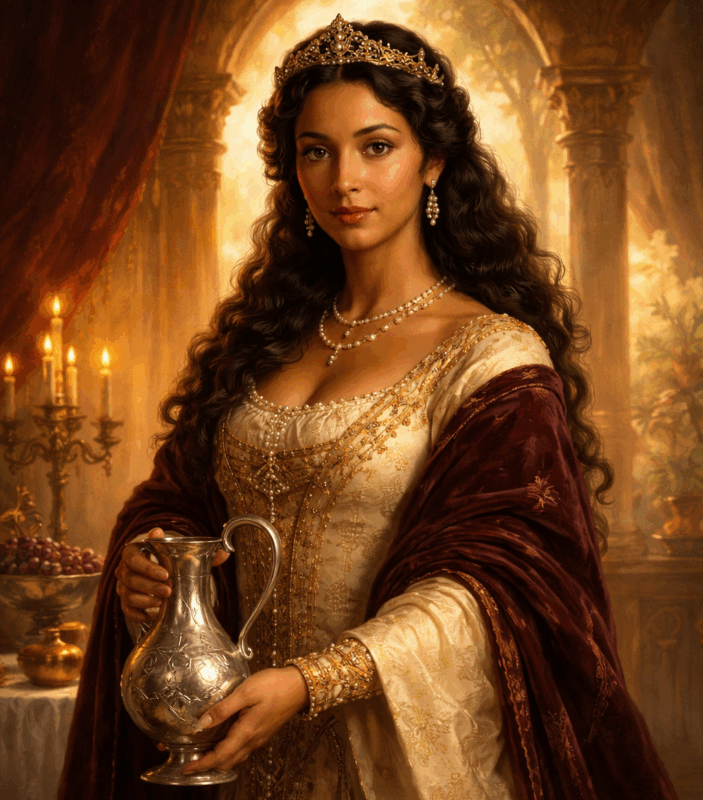
Lady Macbeth has fascinated audiences for more than 400 years. She’s an enigma.
However, do you see her from just one angle?
Context is critical, and we know that Jacobean audiences would not accept a woman
as the most powerful character in a situation: they were subservient to their
husband’s will. So why does Lady Macbeth shed her womanliness and take on the
traditional role of the man? Surely she’s simply duping her husband so that he’ll do
the dirty work and she’ll get to be queen? Or is she?
Look at the very first lines she speaks after reading the letter from the man who sees
her as his ‘dearest partner of greatness’,
‘Glamis thou art, and Cawdor, and shalt be
What thou art promis’d; yet I do fear thy nature
Is too full o’ the milk of human kindness
To catch the nearest way. Thou wouldst be great, art not without ambition, but
without
The illness should attend it,’
Translated literally into modern English, (with an added stress on ‘will’, we can read
this as,
‘You are already Glamis, and Cawdor, and you will be what you have been
promised, but I fear you are too kind to take the most direct route [to your goal of
being king]. You want to be great, you have ambition, but you don’t have the
sickness that you need to go with it.’
She recognises her husband wants to be king and wants to support him.
She also knows he’s not ruthless enough to kill him on his own – he’s not go the
‘illness’ of ruthlessness.
So what does a dutiful, devoted wife do?
She ensures that her husband gets what he wants by taking on the burden of being
the ruthless, callous one in this power couple.
Of course, you could argue that she’s manipulative and cruel. This could well be
true, but is it the whole truth? Maybe she feels duty-bound to play this part.
Remember, she speaks these words during a soliloquy. No other character hears
her; she has no-one to deceive. These are her private thoughts.
There’s more evidence for the argument that she’s the ultimate dutiful wife. She
can’t do this alone. During the same soliloquy, she cries out to the spirits,
‘Come you spirits,
That tend on mortal thoughts, unsex me here
And fill me from the crown to the toe topfull
Of direst cruelty;’
This demonstrates her need for some otherworldly help to become the person she
needs to be to support her husband in achieving his goals. She’ll need to maintain
control in dangerous times, keep her husband motivated in times of weakness, and
‘Look like the innocent flower’, retaining her feminine persona for the sake of those
around her.
Now, we need to remember her final scene. In Act 5 Scene 1, she is driven insane
by the deeds she has helped perpetrate. The blood is an unmissable symbol of her
feelings of guilt. She’s no psychopath: her feelings of remorse destroy her in the
end.
Poor Lady Macbeth. She supported her husband in his ambitions to become king,
only to die apart from him, unable to accept the part she had played in the downfall
of King Duncan. She’s a tragically devoted wife.
What do you think?
Being able to offer and evaluate alternative interpretations is a higher-level skill
across the exam boards. Shakespeare’s works are wide open to interpretation;
there are very few stage directions compared to other plays, giving directors (or
students like you) great freedom of interpretation.
